

How to Wash a Car the Right Way
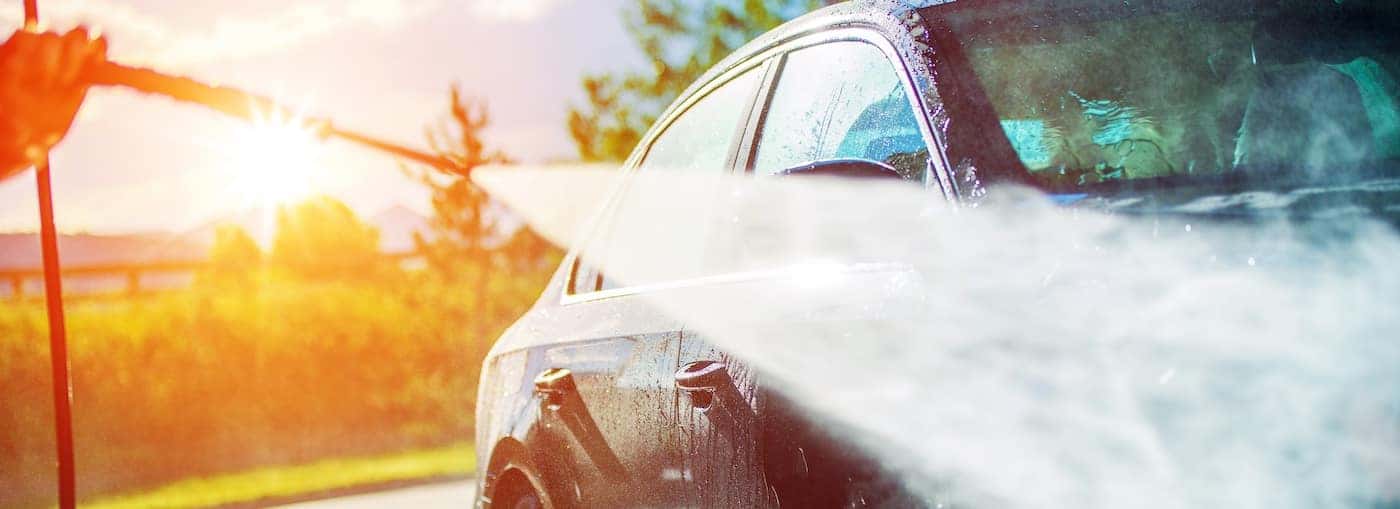
Washing a car regularly helps to keep it looking like new, but that’s not the only reason that Bloomington drivers should know more about car wash frequency! Knowing how to wash a car the right way is essential if you want to prevent exterior damage, rusting, or fading. Any of these issues might weaken a vehicle or lower its resale value, but once you know how the process works—including the two-bucket method professional detailers swear by—it’s relatively easy to keep things looking and working as they should.
Gather Up Your Supplies
Getting ready to wash a car? Make sure you have everything you need on hand:
- Although you might be tempted to use household products like dish soap or Windex, the truth is that you’re better off using a pH-balanced car wash soap, free from ammonia and other chemicals that could strip wax, dry out rubber trim, or damage your exterior.
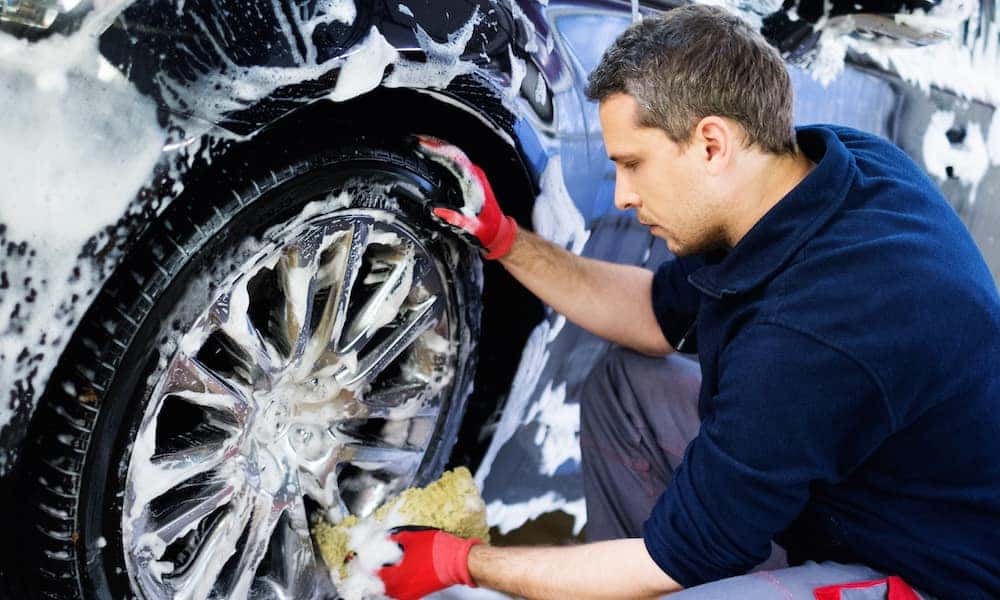
- For the wheels and tires, use an acid-free pH-balanced aluminum cleaner along with a dedicated wheel brush. Or, talk to an expert to find a product that will work for your wheels.
- Set up two buckets fitted with grit guards—one for soapy water and one for a clean rinse. The grit guards trap dirt at the bottom of the bucket so you’re not reloading your wash mitt with grime. It’s never a bad idea to have a hose or pressure washer on hand, as well!
- Don’t use any old sponge, as some products can leave tiny but undesirable scratches on your vehicle. We recommend a microfiber wash mitt, as well as soft microfiber towels for drying. A clay bar can be helpful for removing stuck-on sap and debris.
- You’ll also want to grab compound, polish, and wax from your local parts department. Carnauba and polymer wax are both common, but the latter will dry more quickly.
How to Wash a Car: Step-By-Step
- Rinse. Hose your car off from the roof down to remove heavier debris that might scratch your vehicle if it isn’t washed away first. Don’t skip the roof and windows on your way down.
- Wash with the two-bucket method. Dip your mitt in the soapy bucket, wash a small section, then rinse the mitt in your clean-water bucket before reloading it with soap. Work top to bottom and section by section to limit the spread of swirl marks.
- Clean the glass. Once the primary exterior surfaces are washed, use an ammonia-free solution on each of the windows.
- Finish with wheels and tires. Save the wheels, tires, and wheel wells for last, since these spots are usually the dirtiest and you don’t want to drag that grime across your paint.
- Decontaminate and correct. Use a clay bar to remove anything still stuck to the surface, working carefully and using it as a lubricant-only tool. Once that’s done, apply 2-4 layers of compound evenly across the surface.
- Polish. Apply a dual-action polisher to give your car that glossy, “brand-new” look. A machine polisher gives you more even results than hand polishing, though a soft towel works in a pinch.
- Wax. Apply a fresh coat of carnauba or polymer wax to lock in your clean and lock out damaging agents like road salt and UV rays.
How to Dry Your Car Without Scratching the Paint
Drying is where a lot of swirl marks actually happen, so it deserves as much care as the wash itself. Use a large, clean microfiber drying towel or a natural chamois and blot the surface instead of dragging the towel across the paint. Work one panel at a time, wringing the towel out often so you’re not reintroducing dirt. A compressed-air blower can help push water out of tight spots like door jambs, mirrors, and badges before it has a chance to drip and leave spots. Whenever possible, wash and dry in the shade rather than direct sunlight—hot paint dries water and soap too quickly, which leads to spotting and streaking.
Hand Wash vs. Automated Car Wash
Both methods can be safe for your vehicle, but they come with different tradeoffs. A hand wash using the two-bucket method gives you the most control over water quality, contact pressure, and product choice, which is why most detailers still recommend it for vehicles with delicate paint or a fresh ceramic coating. Touchless automated washes skip physical contact entirely, relying on stronger detergents to lift dirt instead—convenient, but those chemicals can be harder on wax and sealant over time. Soft-cloth automated washes fall in between, offering speed and convenience with some risk of light swirl marks if the equipment isn’t well maintained. If you’re short on time, an automated wash is far better than not washing at all; if you want to protect a show-quality finish, hand washing is still the safer bet.
How Often to Wash a Car
Your recommended car wash frequency will vary, depending on how and where you drive. If you often run into road salt on the roads near Peoria, or like to go off-roading out past Normal, frequent car washes are of the utmost importance. In these cases, you’ll be best served by a weekly car wash, even if it isn’t quite as extensive as the process described above. Make sure you get underneath the car, too, to rinse away salt and grime before it can start corrosion.
If you only really use your car for commuting, and the weather’s treated you well, getting your car washed one to two times a month is probably sufficient. Although you won’t need to wax every time, we think it’s important to do so at least twice a year.
Frequently Asked Questions
What is the two-bucket method?
The two-bucket method uses one bucket for soapy water and a separate bucket of clean water for rinsing your wash mitt between sections. Rinsing the mitt before reloading it with soap keeps grit out of your wash water, which is the single biggest thing you can do to prevent swirl marks.
Can I wash my car with dish soap?
It’s best to avoid dish soap. It’s formulated to strip grease and wax, which means it can remove the protective wax or sealant on your paint and dry out rubber and plastic trim over time. A dedicated pH-balanced car wash soap is a safer choice.
Is it bad to wash your car in direct sunlight?
Yes, it’s best to wash and dry your car in the shade. Direct sun heats up the paint, which causes soap and water to dry too quickly and often leaves behind water spots and streaks.
Is a touchless car wash bad for my paint?
Not necessarily, but it relies on stronger chemicals instead of physical contact to remove dirt, which can be tougher on wax or sealant with repeated use. Hand washing still offers the most control if you want to protect your paint long-term.
How often should I wax my car?
Most drivers should plan on waxing at least twice a year, though vehicles that see heavy sun exposure or winter road salt can benefit from waxing every few months.
Learn More with Sam Leman Automotive Group
Would you like to learn how to clean car seats? Our service team is always happy to offer car care tips to our valued customers throughout the Central Illinois area. Don’t hesitate to contact us if you have any further questions on how best to maintain your vehicle.
More From Sam Leman Automotive Group
Most Affordable Used Hybrids & PHEVs on a Budget
Making the switch to fuel-efficient driving doesn’t have to break the bank. Whether you’re looking to save on gas costs or reduce your environmental footprint, there are excellent options when it comes to finding the best hybrid on a budget. Hybrid and plug-in hybrid electric vehicles (PHEVs) combine a traditional gasoline engine with an…
2025 Chevy MPG Ratings
Shopping for a new vehicle and want to cut costs on your Bloomington commute? At Sam Leman Automotive Group, we’ve put together a comprehensive guide, detailing Chevy truck miles per gallon ratings and figures for fuel-efficient Chevy cars. Every gas-powered model from the 2025 lineup is listed alongside its fuel economy ratings. Once you’ve finished reading our…
Will Tariffs Increase Car Prices?
Tariffs have become increasingly common in recent years as more politicians have begun to advocate for their use. But what is a tariff, and will tariffs increase new automobile prices for Bloomington drivers? Tariffs play a significant role in shaping the prices of automobiles, influencing both manufacturers and consumers. When a country imposes tariffs…